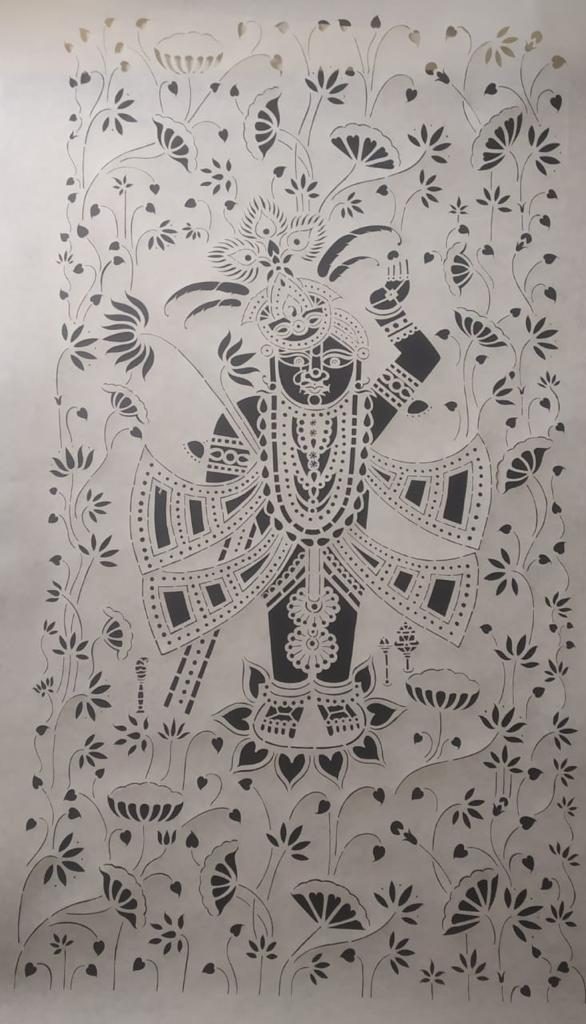
Sanjhiart is a traditional art of stencilling. It is a paper–cut art form used as a daily act of devotion in Krishna temples of Mathura.The art originated from the Braj region and is closely associated with Vrindavan and Mathura. It was particularly practiced during the fifteen days of Pitru Paksha (a period dedicated to remembering and offering prayers for ancestors) within temple courtyards and sanctums. The purpose of the art was to emphasizethe impermanence, remembrance of ancestors, and devotional offerings.
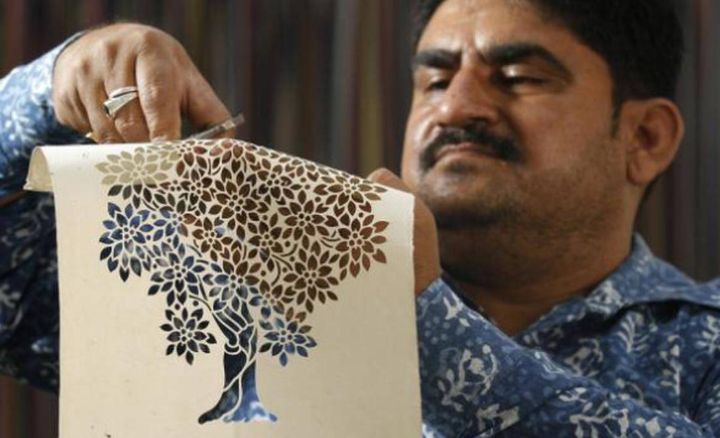
Artist preparing Sanjhi art (Source: The Hindu)
The ‘Sanjhi’ word originated from the Sanskrit term Sandhya, meaning twilight or the sacred moment of transition. Sandhya, which means evening, is associated with prayers and reflection, and Sanjhi emerged as a visual offering created during this liminal hour. It is also said that the Sanjhi could be a corrupted form of the word Sancha, which means a mould. It could also be derived from words like Sajja and Sajawat, which all mean decoration.
Historical Background – Stencilling is an ancient technique that originated in China and Egypt between 2000 and 3000 BCE. As trade routes expanded between China and the Middle East, the craft gradually travelled to Western Europe and later to America, where it gained popularity and was commonly used to decorate homes and places of worship. It is generally assumed that travellers from China brought this technique to India before the advent of the Muslim ruler. However, this art gained popularity and flourished under the Muslim patronage, especially when artists from Iran and other parts of the Middle East were invited to embellish palaces, forts, mosques and tombs. However, the exact date is not recorded. It is believed that Sanjhi art again gained popularity between the 16th and 17th centuries, during the period when Vaishnav temple culture flourished in the Braj region under the Bhakti movement. It started as a temple-based ritual performed by ‘Goswamis’ and temple priests of the Vaishnav sect. Each day, a new design was created as an offering to Radha and Krishna, reflecting the cyclical nature of time and devotion.
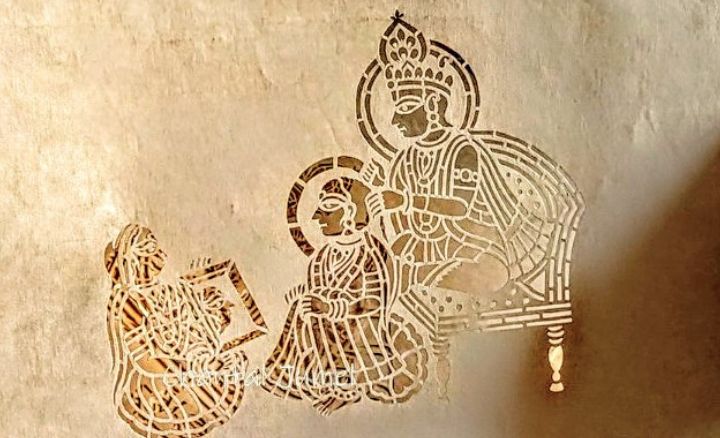
Mythological stories depicted through sanjhi art (Source:IndiaInch)
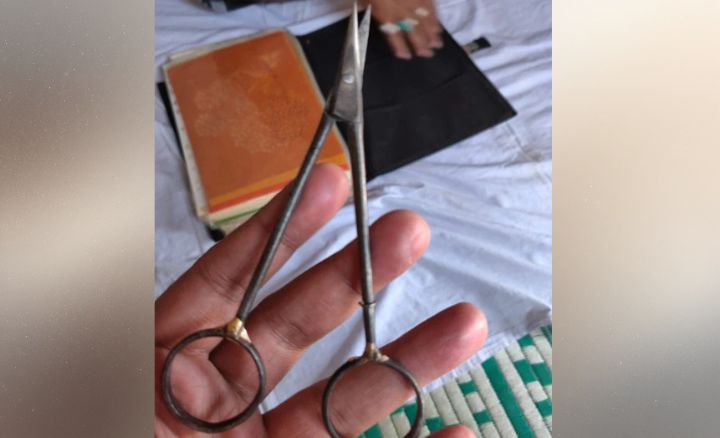
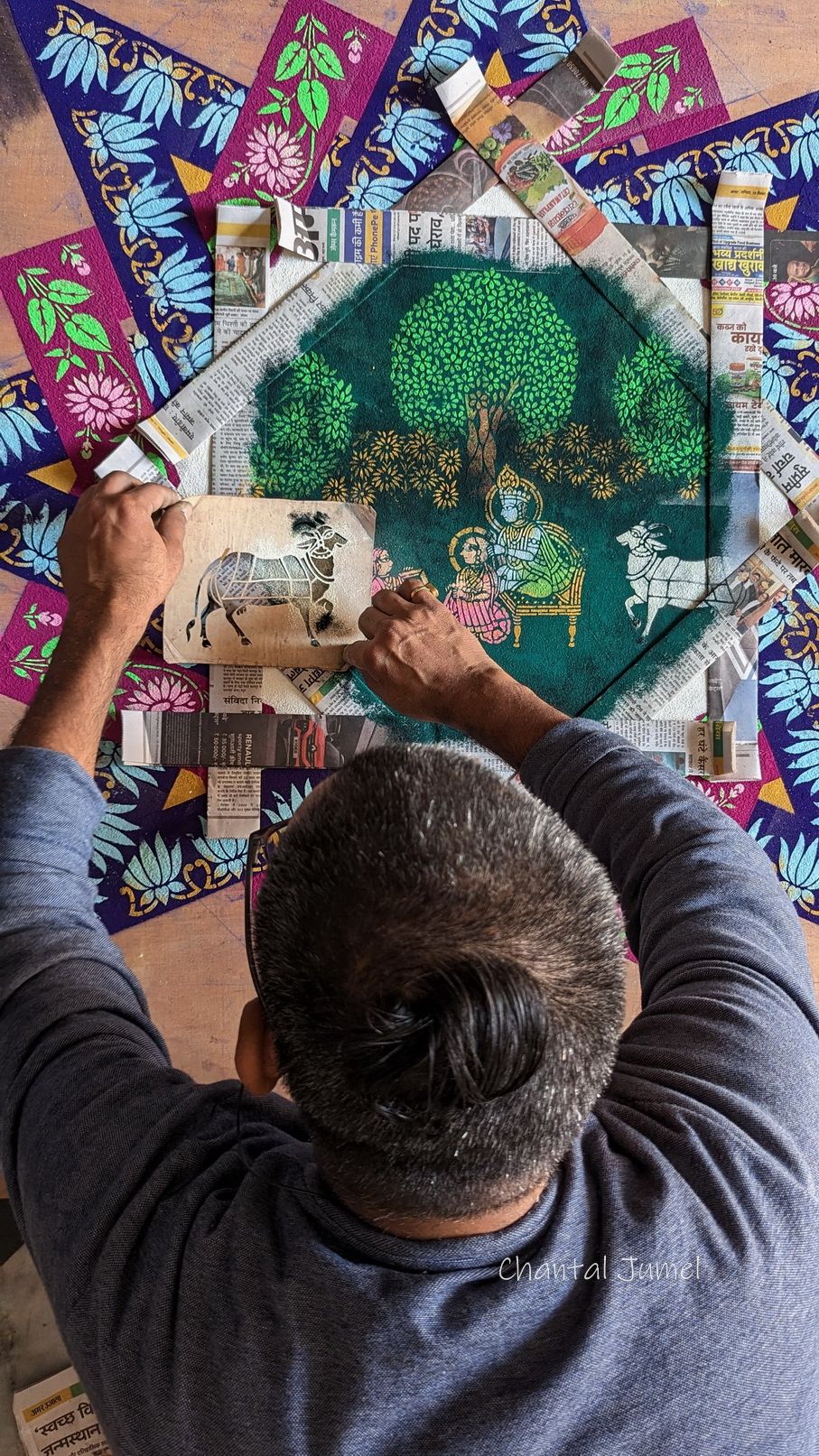
Cultural Significance and Craft Technique –Sanjhi holds deep cultural significance as a form of bhakti. The imagery used in Sanjhi primarily draws from Krishna lore that includes Raas Leela scenes, the Yamuna landscape, lotuses, peacocks, cows and episodes from Krishna’s life in Braj. These compositions are symbolic narratives arranged in symmetrical and mandala-like structures. It is created using handmade paper and fine cutting tools. Artists cut intricate stencil layers by hand, often without preliminary sketches. Art functions as a visual storytelling tradition, translating mythology and devotion. The act of making sanjhi itself is considered a form of prayer.
Curved and pointed scissors specially used forsanjhi art (Source: Abhivyakti)
In contemporary times, Sanjhi has moved beyond temple rituals into museums, cultural festivals, design institutions, and exhibitions. Artists now create framed Sanjhi works on paper that preserve the art form while adapting it to modern audiences. Sanjhi motifs are also referenced in textiles, graphic design, and stage installations. However, this transition has raised concerns about the loss of mythological ritual context as art is at risk of being seen purely as decorative rather than devotional art.
Sanjhi represents an intangible cultural heritage, mainly under the domain of traditional craftsmanship, where knowledge, ritual, and practice are as important as the physical outcome. Sanjhi demonstrates how cultural traditions survive not through tangible objects alone, but through disciplined generational practice and knowledge systems.
Rangoli using a stencil of Sanjhi art(Source – Chantal Jumel photography)