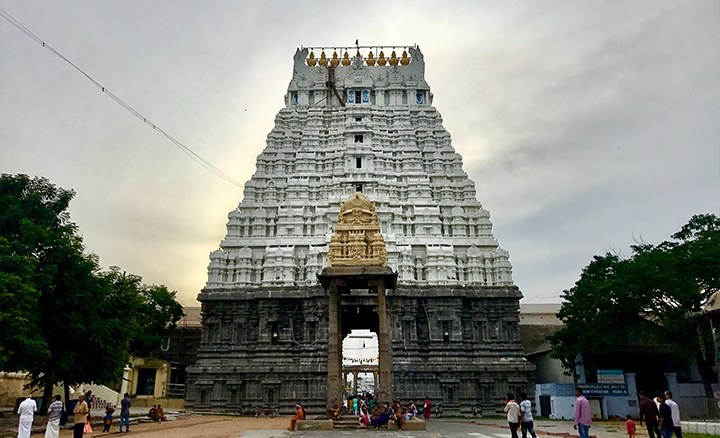


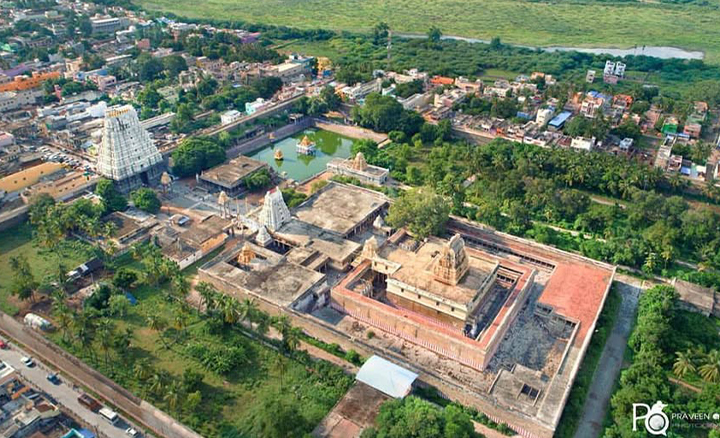
Located in the heart of Tamil Nadu, Kanchipuram is famously known as the city of a Thousand Temples and for a good reason. One of ancient India’s seven Moksha-puris, this sacred city has been an epicentre of religion, art, and philosophy for over two millennia. Though the Pallavas put it on the architectural map with their bold temples and seafaring spirit, Kanchipuram finds mention as early as 300 BCE in Panini’s texts and in Ashokan edicts under the name ‘Satyaputta’, linked to one of its many old titles, Satyavratakshetra.
The word Kanchi itself refers to a golden waist girdle, fitting for a city that still dazzles with cultural richness. At its spiritual heart lies the Kamakshi temple, one point of a powerful Shakti triangle alongside Madurai and Kashi, with many temple towers said to subtly face her shrine. From the graceful Vaikuntha Perumal Temple to the towering Ekambareswarar, from the intricately carved Kailasanathar to the commanding presence of Kamakshi Amman, every stone here hums with history, devotion, and timeless charm.
1.Kailashnathar Temple
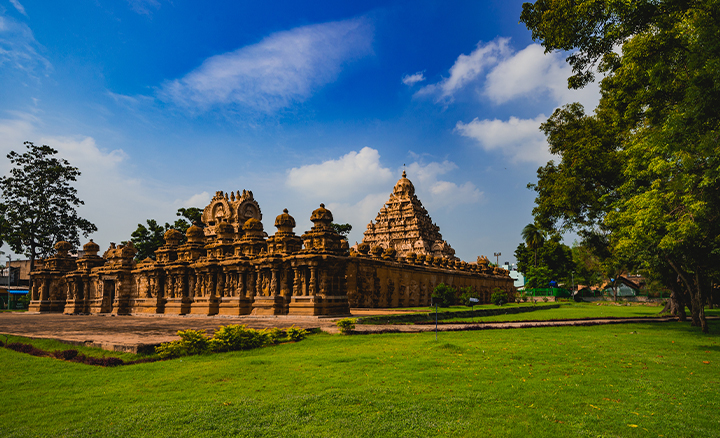
The Kailasanathar Temple, built in the eighth century by Pallava king Narasimhavarman II, is a landmark of early Dravidian architecture and the oldest structural temple in Tamil Nadu. Constructed from soft, yellow sandstone, it features a simple east-facing layout with a sanctum (garbhagriha), vestibule (antarala), and mandapa, crowned by a modest yet elegant pyramidal vimana. Surrounding the main shrine are fifty-eight miniature sanctums, each depicting different forms of Shiva, creating a cosmic mandala in stone. The outer walls are richly carved with divine figures, dancers, and mythical scenes that hint at the sculptural finesse.
The Kailasanathar Temple is a visual playground for Shaivite iconography, where stone comes alive with drama and divinity. You will find Shiva in all his moods, fierce as Tripurantaka, wild in his Tandava, fearsome as Bhairava, and balanced as Ardhanarishvara, the half-male, half-female form. The supporting cast is no less star-studded. Ganesha strikes a charming pose, Durga stands victorious, Vishnu and Brahma make dignified appearances, and celestial dancers swirl across the walls. Appearance of lions and mythical beasts provide a sense of movement and rhythm to the architecture.
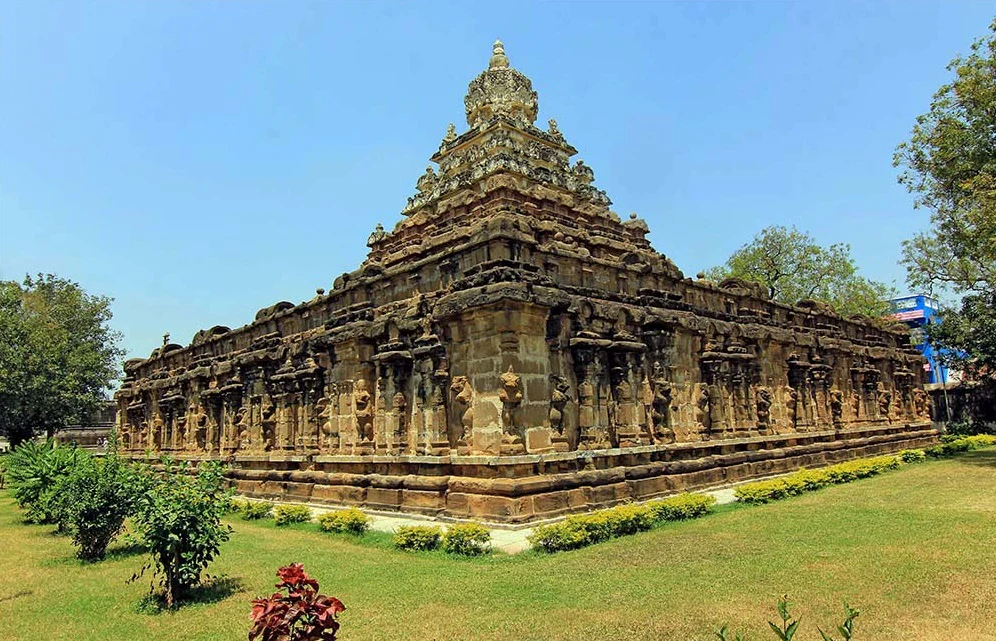
This temple is the second oldest temple in Kanchipuram after Kailasnathar Temple. Vaikuntha is the celestial abode of Vishnu. Nandivarman II, who was the devout follower of Vishnu, has built this temple in late eighth century. This three-tiered Pallava art masterpiece was also a political manifesto, beautifully combining royal imagery within religious architecture.
This temple is one of the 108 Vishnu temples that collectively make 108 Divya Desam. The 108 Divya Desams are a group of sacred temples dedicated to Lord Vishnu, celebrated in the devotional hymns of the Alwars – twelve poet-saints from South India who lived between the 6th and 9th centuries CE. This temple does not have just one sanctum, but three, stacked one above the other! Unlike most temples where the deity resides in a single garbhagriha, the Vaikuntha Perumal Temple breaks convention with its three-tiered sanctum design. Each level houses a distinct image of Vishnu: seated on the ground floor, standing on the middle floor, and reclining (Ananta Sayana) on the topmost tier. It’s a vertical journey through Vishnu’s cosmic manifestations—something rarely seen in South Indian temple architecture.
3. Ekambareswarar Temple
Dominating the skyline of Kanchipuram with its towering 11-tiered gopuram, the Ekambareswarar Temple stands as a magnificent ode to Shiva worship in South India. With roots tracing back to the Pallava period and later expanded by the Cholas and Vijayanagara rulers, the temple reflects a layered history of dynastic patronage and architectural brilliance. Sprawled across twenty-five acres, it is especially renowned for its 1000-pillared hall and the ancient mango tree believed to be over 3,000 years old, under which Parvati is said to have worshipped Shiva. The Dravidian architectural features—elaborate sculptures, pillared corridors, and colossal mandapas—make this temple not only a sacred space but also a living museum of Tamil temple art.
The iconography of the Ekambareswarar Temple centres on Shiva as the Prithvi Lingam, representing the Earth element of the Pancha Bhoota. The ancient mango tree, under which Parvati is believed to have meditated, is a key symbolic feature. The temple highlights rich Shaivite imagery, including Dakshinamurti as the divine teacher, Somaskanda panels of Shiva with Parvati and Skanda, and fierce forms like Tripurantaka. Intricate carvings of ganas, celestial dancers, Yalis, and the 63 Nayanmars adorn the mandapas and corridors, blending mythology, devotion, and metaphysical symbolism.

4.Varadaraja Perumal Temple
The Varadaraja Perumal Temple is a Vaishnavite gem that dates to the Chola period and later flourished under Vijayanagara kings. Think towering gopurams, pillared mandapams, and corridors that echo with centuries of devotion. One of its coolest secrets? A wooden idol of Vishnu, Atthi Varadar, resting underwater and revealed to the public just once every 40 years! Add to that a 100-pillared hall with jaw-dropping stone carvings, and you have a temple that is not just sacred but also architecturally stunning.
The iconography of the temple reflects classical Vaishnavite aesthetics. The main deity, Varadaraja Perumal, stands in a commanding posture holding the conch, discus, mace, and lotus, symbolizing his cosmic functions. He is accompanied by Sridevi and Bhudevi, representing divine grace and the earth. The temple also houses intricate depictions of Vishnu’s various avatars, the 12 Alwars, and narrative reliefs from the epics. The fig wood idol, Atthi Varadar, when displayed, presents Vishnu in a reclining pose, adding a unique iconographic layer to the temple’s already rich visual tradition.
The temples of Kanchipuram, often hailed as the city of a thousand temples, form a living tapestry of South India’s religious, architectural, and cultural legacy. From grand Shaivite shrines like Ekambareswarar to the deeply venerated Vaishnavite sanctuaries such as Varadaraja Perumal, each temple reflects centuries of devotion, patronage, and artistic brilliance. Their towering gopurams, intricately carved mandapas, and sacred tanks are more than architectural wonders—they are enduring symbols of a spiritual and cultural continuum. Collectively, these temples make Kanchipuram not just a pilgrimage destination, but a vibrant repository of living heritage.